The St. Lawrence is central to the Québec economy, playing a key strategic role. As a vital waterway linking the Atlantic Ocean to the Great Lakes, it facilitates goods transport and promotes international trade. The St. Lawrence’s privileged geographic position and well-developed port infrastructure make it a vital economic asset for Québec, strengthening its competitiveness on the world stage and contributing to its sustainable development.
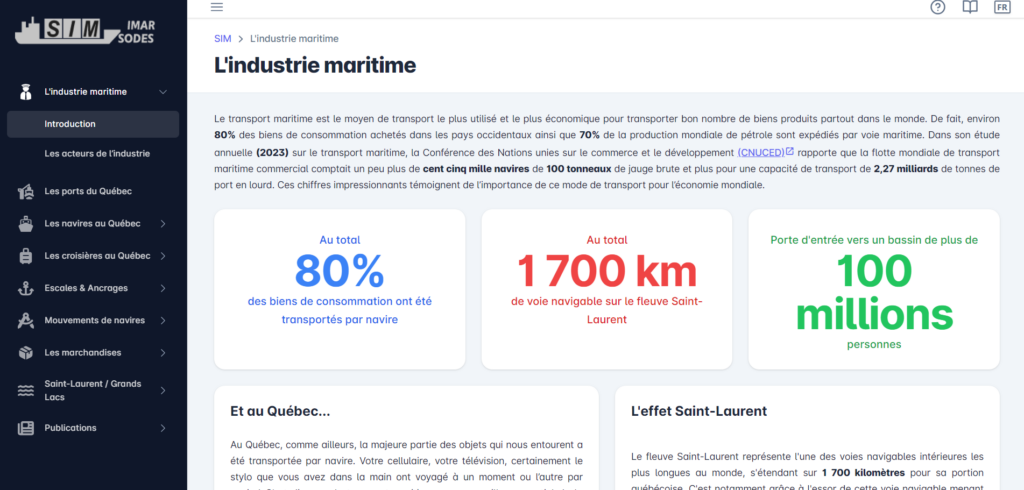
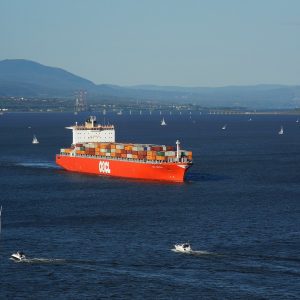

The purpose of the Maritime Information System (MIS) is primarily to constitute a comprehensive platform for collating, processing and disseminating essential information to all maritime-sector players.
The MIS meets the needs of shipowners/operators, pilots, port authority professionals, public servants, researchers and maritime enthusiasts by providing them with quality, up-to-the-minute data taken from various sources, including the Canadian Coast Guard, port authorities and the Canadian Hydrographic Service. The data is then analyzed by experts to provide relevant statistics and indicators.
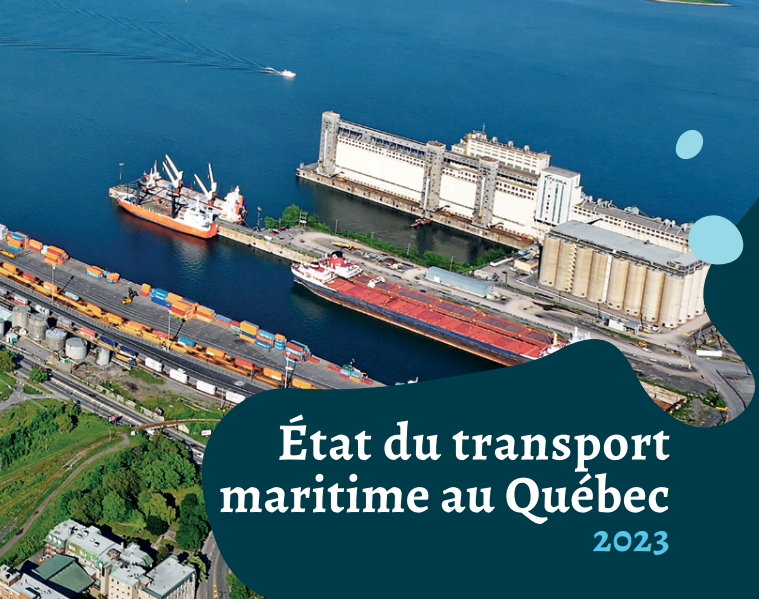
Analyses are available online, along with detailed graphs and indicators. Quarterly newsletters are also published, as well as the annual État du transport maritime au Québec (State of Québec maritime transport report), which provides an up-to-date overview of the sector.
Stay informed
Find out more now
Innovation maritime (IMAR) and SODES set up the MIS primarily to collate, process and disseminate data that is useful for maritime-sector stakeholders. The solution envisaged was developed following discussions with customers and partners. It is based on combined expertise in IT, navigation and maritime transport logistics.
The project objectives entailed implementing mechanisms making it possible to track, document and analyze changes in maritime traffic, set up an information system able to provide reliable data on the industry for use by the various maritime-industry players and create decision-making tools to guide the sector’s development.
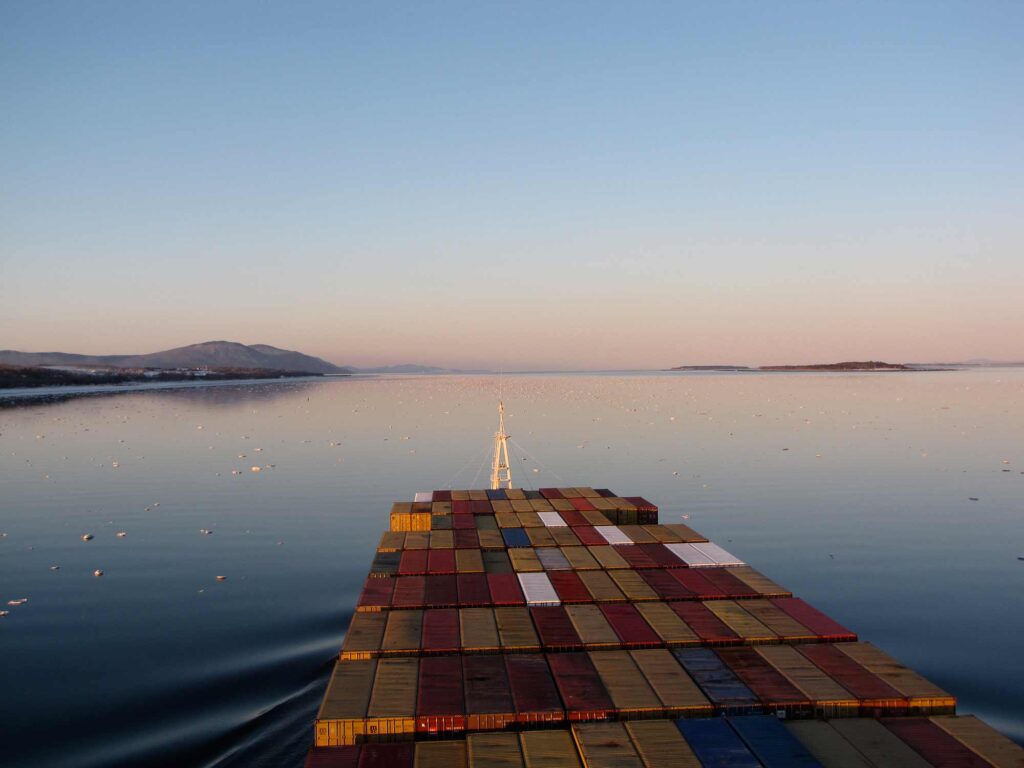
Maritime transport is the most economical, widely used means of transporting goods produced the world over. The majority of our consumer goods are carried by ship at some stage on their way to their final destination. In Québec, the maritime sector’s importance goes far beyond simple goods consumption. The St. Lawrence River, one of the world’s longest inland deep-water seaways, makes the maritime industry a key economic driving force for Québec’s development.
The document “L’État du transport maritime au Québec” (State of Québec maritime transport report) is intended as an essential reference, aimed at acknowledging the St. Lawrence’s value and harnessing its economic, social and environmental development potential, given its strategic geographic position in North America. Through the data it contains, this document provides a complete, up-to-date picture of the province’s maritime transport and port activities.
This publication is aimed at both maritime-industry players and anyone interested in learning more about this vital sector of the Québec economy.
The report’s production involved consultation of numerous data sources and collaboration between various organizations, who shared information and data essential for presenting the sector.
As part of its maritime vision Avantage Saint-Laurent, unveiled in June 2021, the Québec Ministry of Transport and Sustainable Mobility (MTMD) expressed its commitment to developing the St. Lawrence River and the Saguenay River as an intelligent maritime corridor driven by innovation and performance.
Among the priorities identified, the sharing of strategic data between corridor stakeholders emerged as a key lever. A collaborative approach was therefore launched to structure the collection, analysis, and sharing of data, drawing on best practices from both Canada and international contexts.
This initiative addresses a need clearly expressed by maritime industry partners. To this end, an opportunity study conducted by CGI provided an overview of current practices, mapped existing data, and proposed a model aligned with internationally recognized initiatives such as FLOW and ONE Record.
The study recommends the establishment of a neutral data governance entity, responsible for overseeing the development of the initiative. This entity would play a central role in structuring decision-making processes, ensuring regulatory compliance, engaging stakeholders, and guiding the implementation of future phases.
It would also be tasked with producing a business case demonstrating the feasibility, economic viability, and strategic alignment of the project, while defining the necessary technological parameters, partnerships, standards, and key performance indicators.
Through this initiative, the MTMD reaffirms its commitment to supporting an innovative, collaborative, and sustainable maritime transport sector for the benefit of Québec’s broader economic ecosystem.

SODES updated the St. Lawrence–Great Lakes trade corridor study initiated in 2013 following a meeting with Canada’s Minister of Transport. This update aims to identify the actions needed to maintain the corridor’s competitive advantages and meet users’ needs, based on some 40 recommendations made in a document published in 2013.
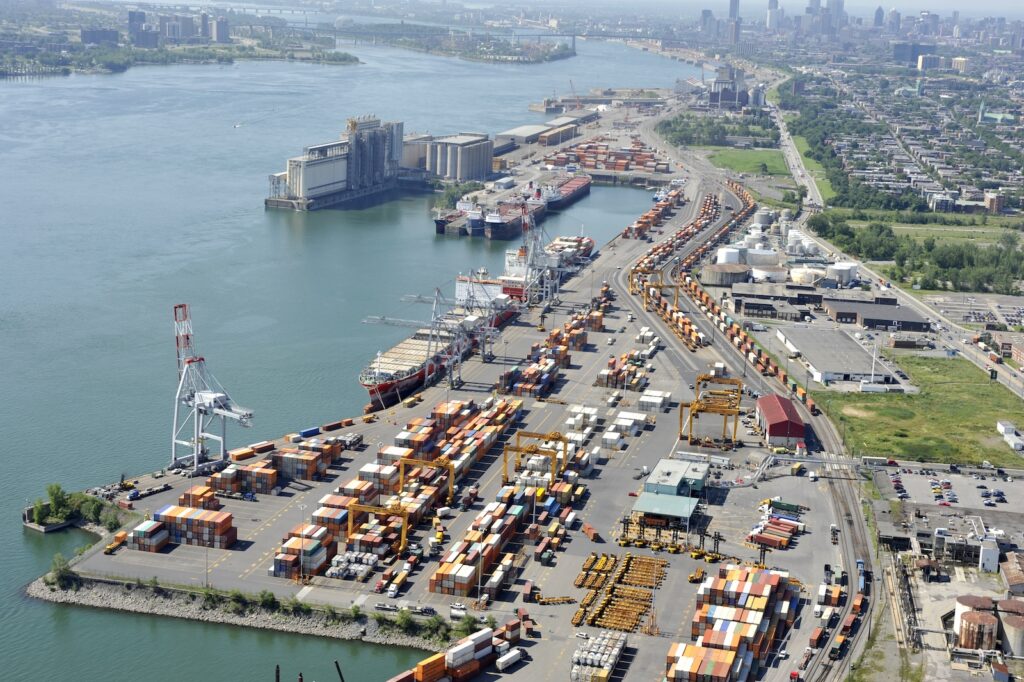
The St. Lawrence–Great Lakes trade corridor monitoring committee, coordinated by SODES, was created following publication of the St. Lawrence–Great Lakes trade corridor study update. The committee’s work seeks to prioritize the 40 or so recommendations put forward and to reach a consensus on a medium- and long-term development vision in order to increase volumes transported in the corridor.
The monitoring committee is composed of 15 members representing St. Lawrence–Great Lakes trade corridor users. Each of the following sectors is represented:
Marie-France Daoust is Director of Corporate Affairs at the St.Lawrence Economic Development Council. With more than 15 years’ experience in entrepreneurship, 10 years in strategic management within the Quebec government and 5 years in public and government affairs, she stands out for her leadership and ability to bring people together. In her role, she is responsible for developing business growth strategy, forging strategic partnerships, and mobilizing maritime organizations around today’s major issues.